Premium Residence Build Cost in Jakarta: What Is Inside the Number per m²
A premium Jakarta build cost per m² is useful only with area definition, inclusions, date, and finish level—how to unpack the claim calmly. (Sep 2026)

A build cost “per m²” for a premium Jakarta residence is only useful when you know what floor area it divides, which trades it includes, and which year and finish level it assumes. Without that, comparing two numbers is noise. This article does not publish a universal Rp/m² for luxury homes. It shows how to unpack the figure so consultants and contractors brief on the same rows.
This is for owners planning a premium custom residence in Jakarta or Greater Jakarta — It is not a tender price, not a Darc quote, and not guidance for type-house packages. Architect fee reading is separate: Luxury Home Architect Fees. Brief criteria before hire: Choosing an Architect for a Premium House in Jakarta.
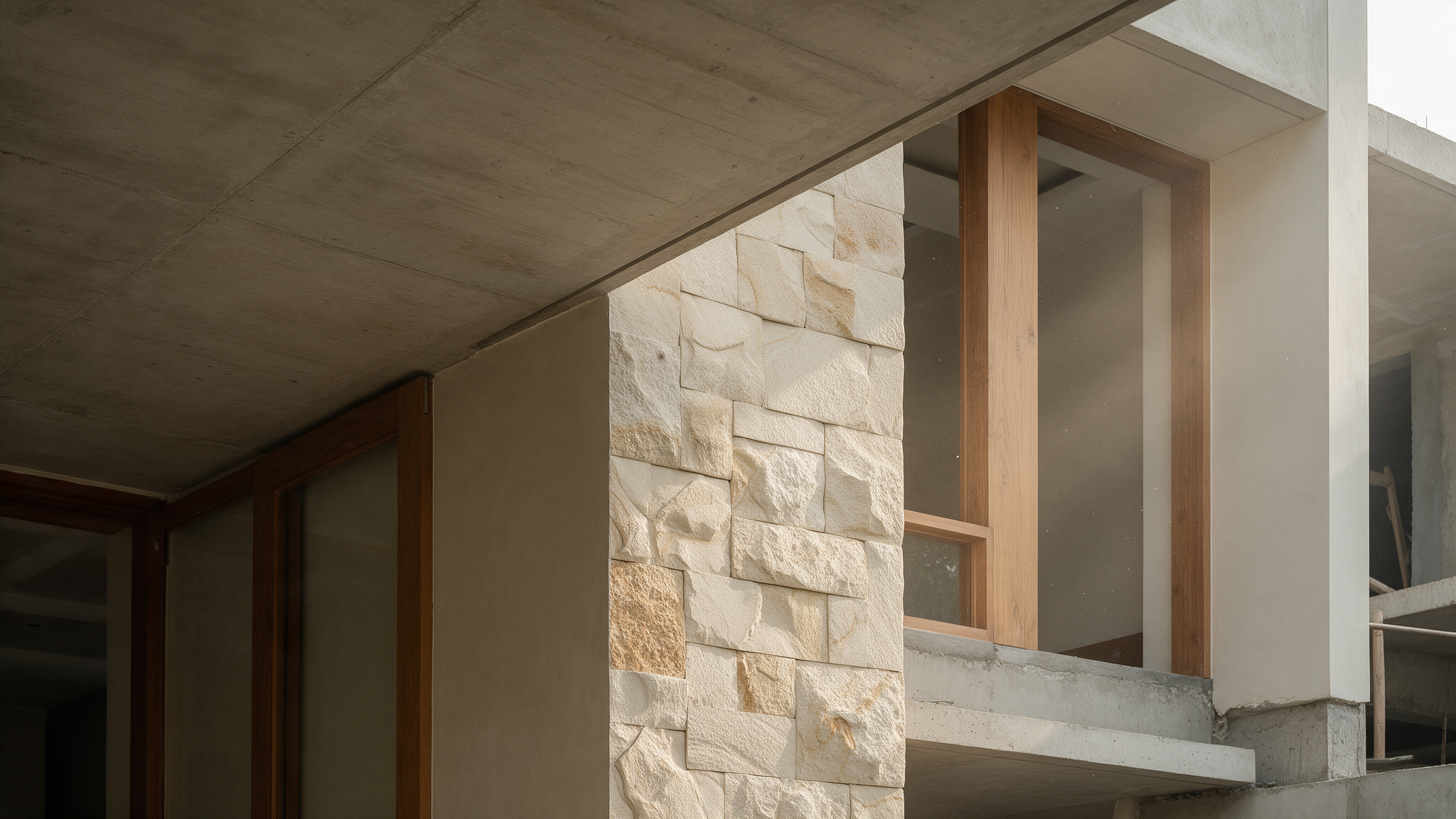
Premium residence craft and materials
Which area is in the denominator
Ask whether the divisor is gross floor area (GFA) including walls and sometimes carport or basement, net usable or carpet area, or building footprint only. A lower Rp/m² on a larger GFA can hide the same total. Premium houses with deep walls, courts, and voids look “expensive per net m²” and calmer per GFA. Align the definition before you compare.
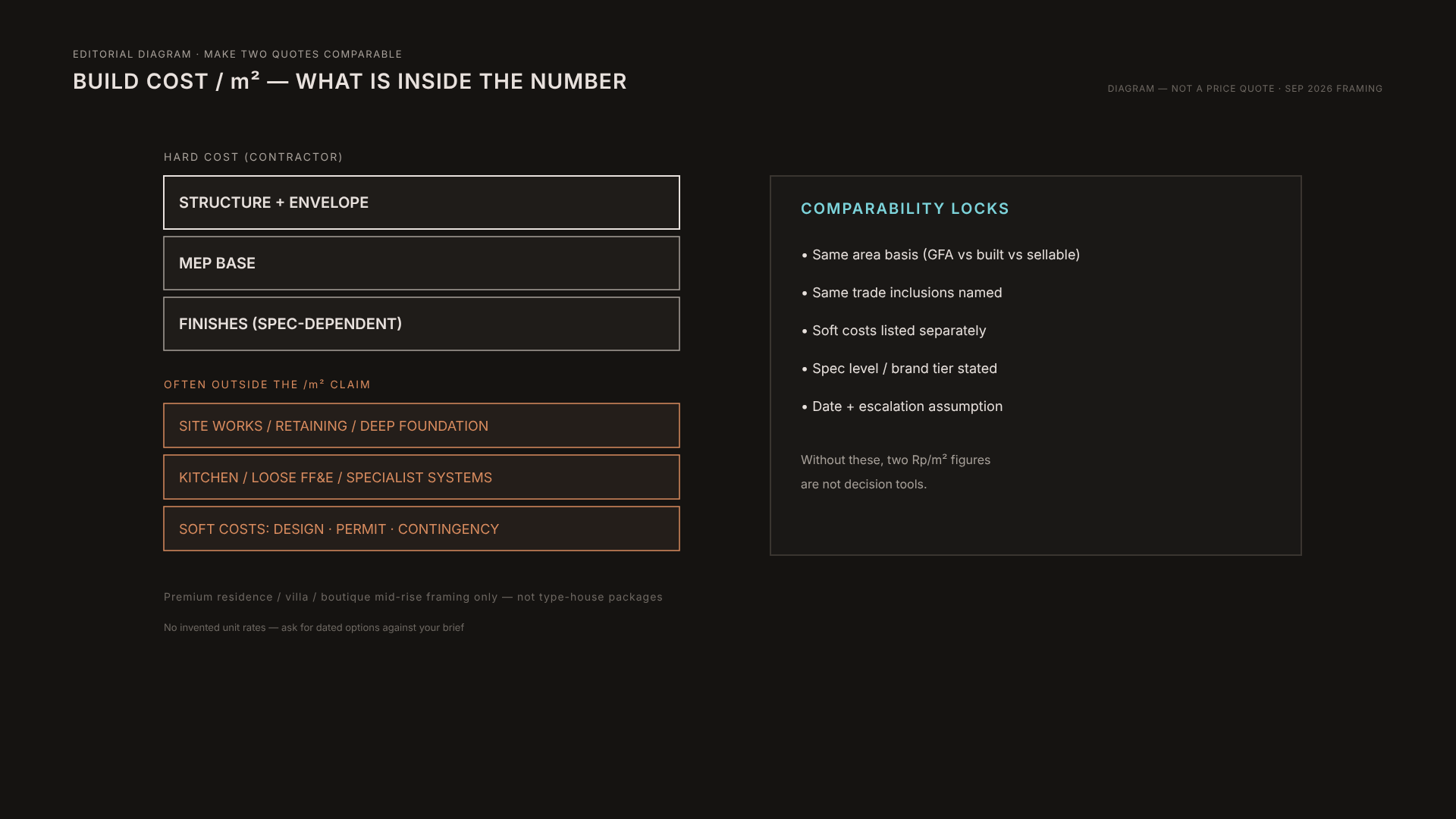
What a premium build cost per m² claim usually contains
Which trades sit inside the contractor number
Typical construction packages (names vary) may include structure and foundations, roof and waterproofing, walls and openings, basic MEP first and second fix, architectural finishes, and external works to a defined line.
Often outside the headline build Rp/m² unless named: loose FF&E, kitchen appliances, AV, full landscape and irrigation, pool equipment upgrades, boundary art, temporary housing during build, major utility upgrades, and authority fees.
Architect and consultant fees, permit packages, project management, and contingencies are frequently omitted from “build cost per m²” talk. Your total project cost is hard + soft + owner-direct purchases. Mixing them in one boastful number helps nobody.
Make two estimates share one sheet
Put both estimates on the same rows before you argue about the rate:
- Date of estimate (labour and material drift)
- City and site access (Jakarta logistics, neighbour constraints)
- Area definition (GFA vs net)
- Inclusions: structure, envelope, MEP, finishes, external
- Exclusions: FF&E, landscape, pool, fees, contingencies
- Finish assumption beyond the word “premium”
- Contingency % and who owns the risk
- Tax / VAT treatment
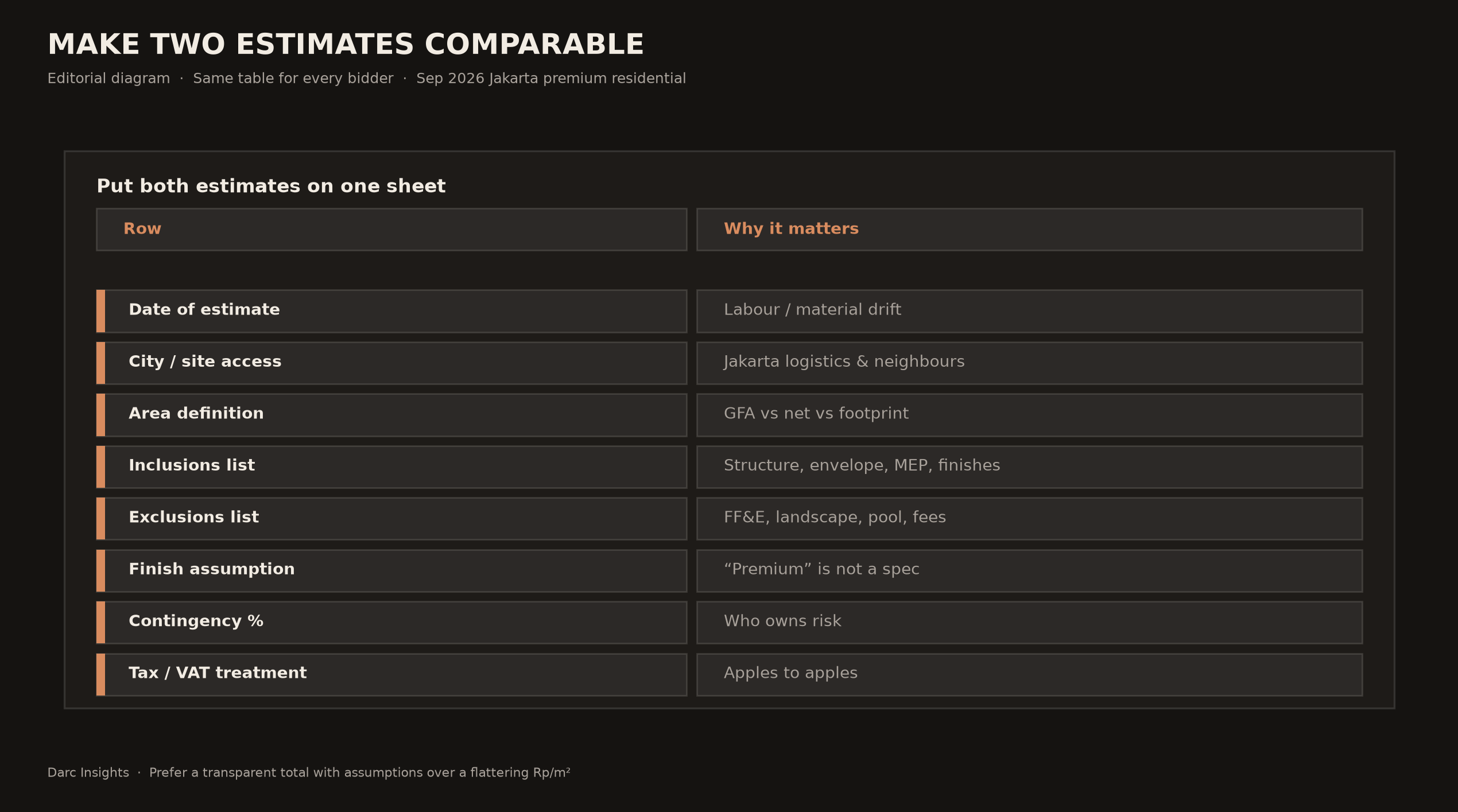
Rows to make two build-cost estimates comparable
We would rather see a transparent total with assumptions than a flattering Rp/m². The brief should demand the same table from every bidder and consultant.
Where cost shock usually starts
On premium residential work, shock rarely comes from the first schematic number alone. It comes when owners discover that the quoted m² rate excluded waterproofing complexity, custom metalwork, or landscape — or used a net area while the contractor priced gross. Aligning area definition and inclusion rows early prevents false “savings.”
Projects such as L House, The Balai, and Cipayung House differ in plot and envelope; they are not a single cost template. Read them via the portfolio as typology evidence, not as a price list. Limitation: we publish no invented Rp/m² bands here. Any range you receive elsewhere needs date, city, area basis, and an in/out list.
Assumptions for this article: September 2026, Jakarta-first premium custom residential. Drivers that move totals without changing the marketing label “premium”: foundation surprises; high glazing ratios; complex courts and drainage; imported finishes with long lead times; late program growth; weak documentation that forces site redesign. Cheaper early documentation often raises construction cost. Stronger envelope detailing can raise the rate per m² and lower operating pain — still not a universal number.
Mistakes that make the rate useless
Comparing Rp/m² without matching area definitions. Treating landscape, pool, and boundary as included without a line. Using an old estimate after a major brief change. Hiding contingency to win a beauty contest of low rates. Mixing architect fee into build Rp/m² — or leaving all soft costs invisible. Approving finishes from samples without install and maintenance cost. Letting the contractor redefine scope mid-build without re-basing the rate.
Before you trust a figure: area basis written, date and city stated, inclusions and exclusions in a table, finish level described beyond “premium,” MEP and waterproofing explicitly in or out, external works boundary drawn, soft costs listed separately, contingency ownership named, and the same table sent to every party after brief changes.
Read build cost per m² as a compressed claim that only works with a defined area, inclusion list, and date. The decision you need is a comparable total project picture, not a trophy rate. When you are ready, send site area, approximate floor area, finish intent, and which stage you are in—we can help you see which rows a comparable estimate still needs. No article replaces a dated estimate against your drawings and brief.
Ready for a cost brief?
Send site area, approximate floor area, finish intent, and which stage you are in. We will reply with the rows a comparable estimate needs—not a universal Rp/m².
Send site & stage