When a Premium Residence Needs an Architect
Hire an architect when site, climate, and consultants need design judgment — not only drawings. STRA/IAI as criteria, stages, and when documentation-only fits. (Sep 2026)

A premium residence needs an architect when the project requires design judgment under constraints: climate, structure coordination, permits, consultants, and trade-offs — not only finished-looking drawings. A draughtsman can document a decided plan; they should not invent the plan, envelope strategy, or consultant brief. STRA and IAI-related credentials are criteria for who may practice as an architect — not a sales slogan, and not a substitute for a clear appointment.
This is for owners of custom premium houses and private villas — Jakarta, Bali, and other tropical Indonesian sites — at hire-intent. Quiet luxury: you will fund proper documents and site decisions. It is not for type-house catalogues, “murah dulu” packages, or contractor-led builds where drawings are an afterthought. Related filters: Choosing an Architect for a Premium House in Jakarta and Luxury Home Architect Fees.
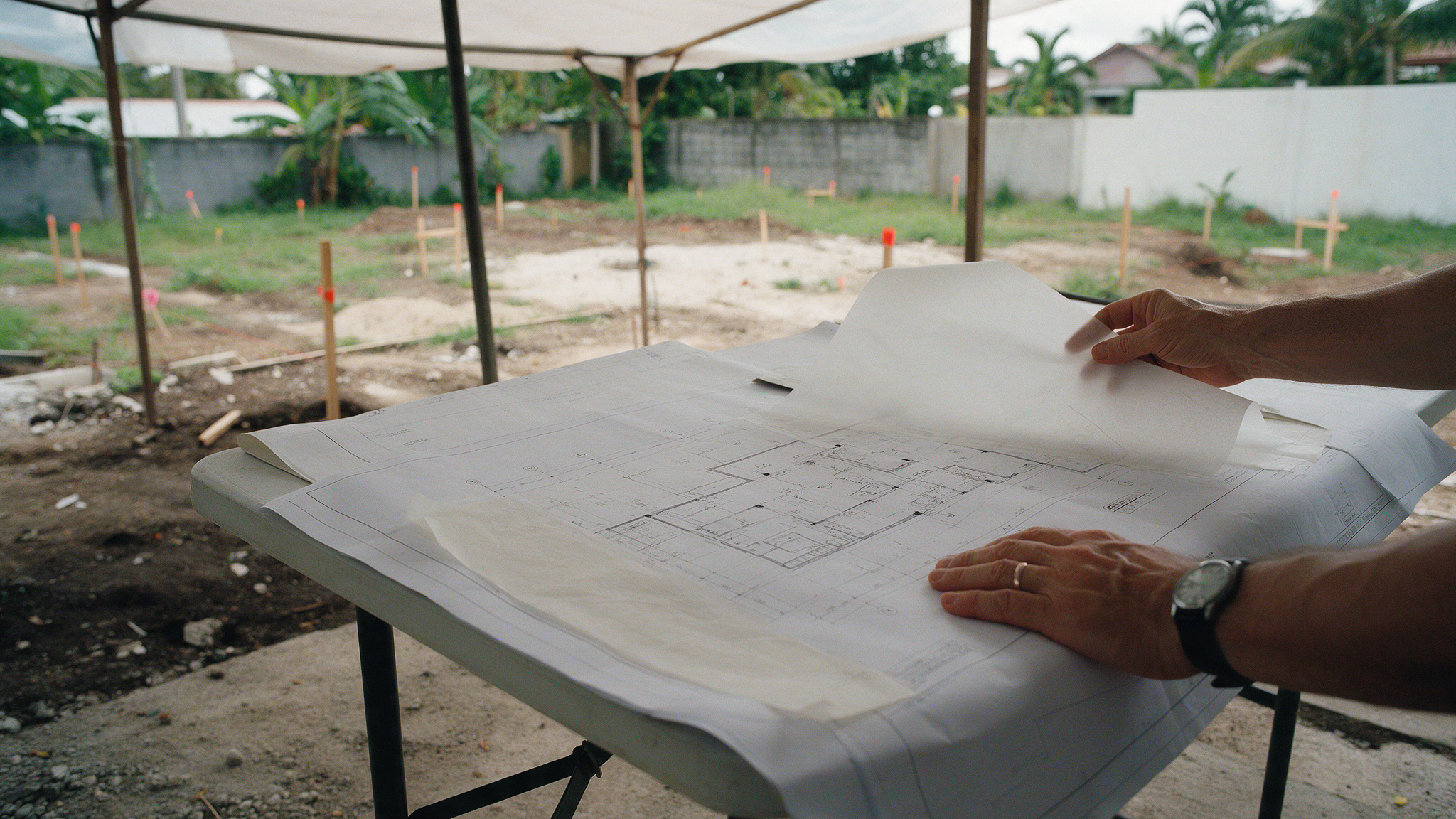
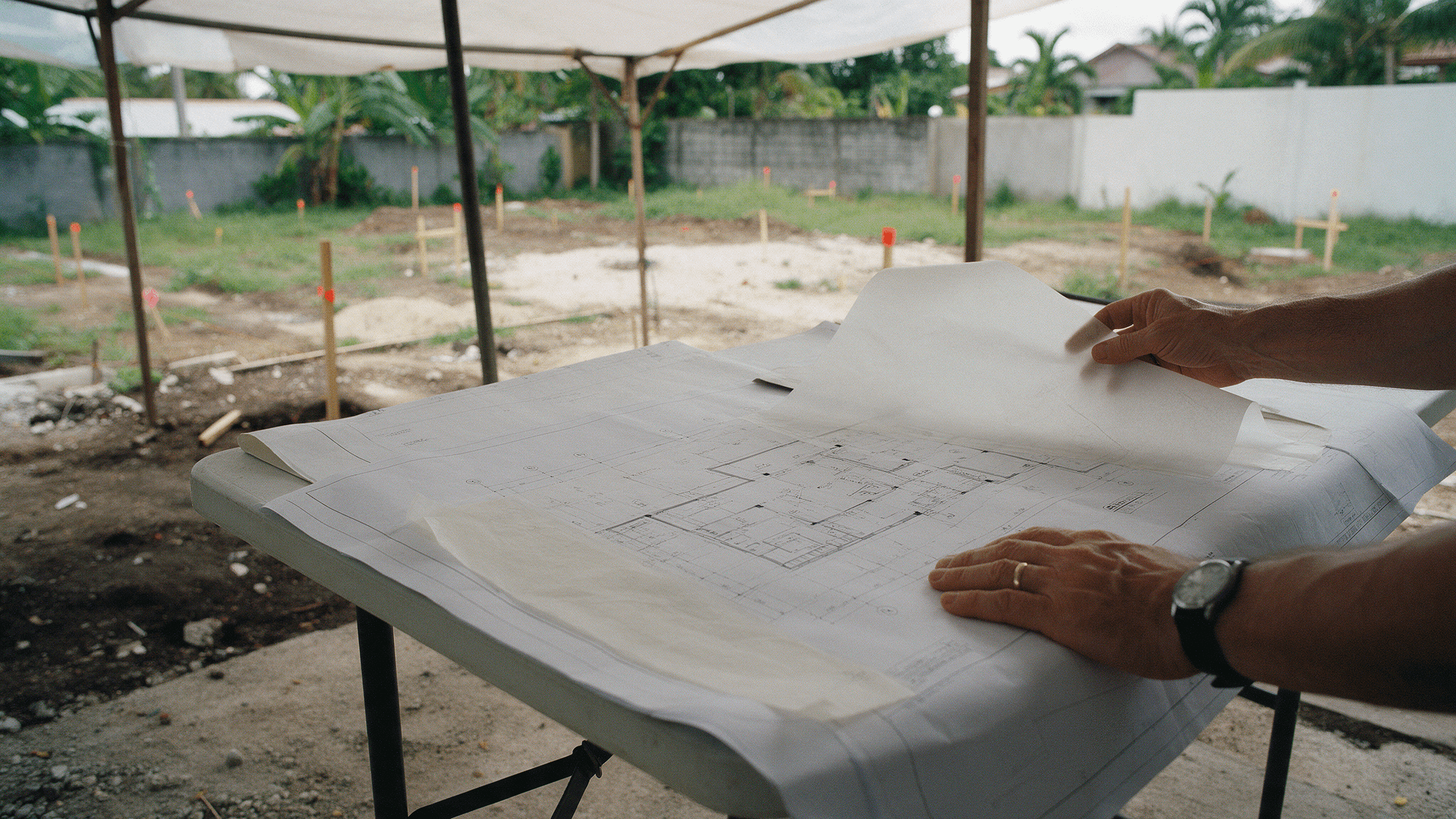
Architect reviewing drawings on a tropical lot
What an architect owns vs what a draughtsman documents
An architect owns problem definition and optioning: site reading, program hierarchy, massing, climate response, coordination with engineers, and documents that can survive construction and permit pathways. They argue trade-offs in writing. Aesthetic taste alone is not the job.
Drawing production from a resolved design intent — plans, elevations, details under direction, revisions to decided geometry — is documentation work. Useful inside a studio or when a prior design is frozen and you only need production. Dangerous when hired to “just draw something nice” with no design authority and no climate or code literacy.
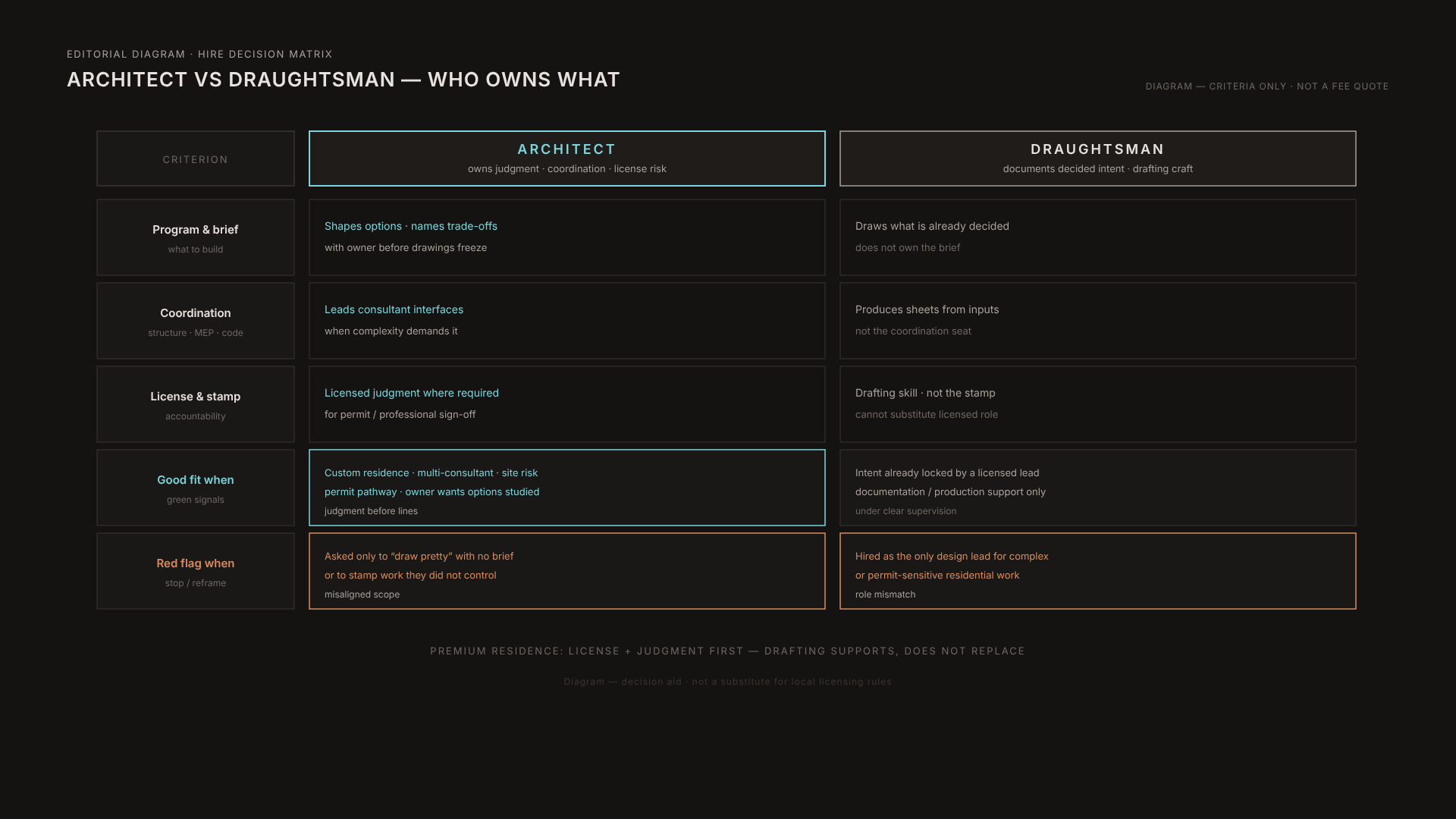
Architect judgment vs draughtsman documentation criteria
Licensing as criteria, not décor
In Indonesia’s professional architecture framework, practice credentials (including STRA — Surat Tanda Registrasi Arsitek — and professional association context such as IAI) are how the public can check that someone is entitled to act as an architect under applicable rules. Use them on your shortlist: ask for current status, scope of competence, and who stamps what. Do not treat a logo on Instagram as proof. Do not treat credentials as a promise of fee level or style fit — still run a brief interview. Rules and document names can update; confirm current requirements with the relevant professional bodies for your project type.
Hire triggers that usually hold
Hire architectural design authority when any of these are true:
- The site fights a standard plan (orientation, neighbours, slope, drainage)
- You want tropical performance designed in, not curtains as architecture — see Tropical Modernism Without the Cliché
- Multiple consultants must share one coordinated model of decisions
- PBG / building approval documents require a coherent architectural lead
- You cannot yet write living vs service hierarchy and climate priorities on one page — see Tropical House Orientation
- The budget is large enough that a wrong envelope or core location costs more than proper fees
Documentation-heavy scopes can fit when a previous architect’s design is complete, still valid for the site and regulations, and you only need production or limited revisions — with someone competent checking that “limited” stays limited. If the contractor proposes redrawing a magazine plan onto your tapak, that is design work wearing a draughtsman’s invoice.
Stages that separate the roles
Name stages: concept / schematic, design development, permit documents, construction documents, tender support, site observation. A draughtsman-only hire usually covers fragments of documentation. An architect appointment should state which stages are included and which consultants you must engage separately.
Role fit when the need is real:
- Site + climate options — architect-led; draughtsman-led usually fails into hot rooms and redesign.
- Coordinated consultant brief — architect-led; draughtsman-led alone is weak and clashes mid-build.
- Pretty drawings of a decided plan — draughtsman-led is fine only if the plan is truly decided.
- Permit-ready architectural set — architect responsibility (verify); incomplete alone stalls approvals.
- Style copy without site reading — an architect should refuse; often offered as draughting — expensive failure.
Pay for judgment where constraints are real. Pay for documentation where intent is already decided and verified. Mixing the two without saying so is how premium residences get mediocre envelopes.
How reverse-order appointments fail
Projects that stay coherent appoint design authority early enough that living/service hierarchy, structure, and climate response are decided before beautiful interiors eat the fee. The reverse pattern — CAD drawings first, “architect” later to fix permits or overheating — costs more than a clear brief and a staged appointment. L House, The Balai, and Cipayung House illustrate typology outcomes of plan and climate decisions; they are not arguments that every plot needs the same scope. Credentials confirm eligibility to practice; they do not replace chemistry-free brief tests or written stage gates.
Assumptions: September 2026, premium custom residential, Indonesia. Architect fees and draughtsman rates are not published as invented percentages or Rp/m² here — see the fees article for how to read fee structures. Fuller architectural stages cost more up front and usually reduce rebuild and dispute cost later; documentation-only looks cheaper until the site contradicts the drawings; splitting design across an unpaid relative, a contractor, and a late-stamping architect creates interface risk you will own.
Before you hire: one-page brief (site, program, climate priorities, decision maker); shortlist checked for current architectural registration / STRA as applicable; stage list matched to what you actually need; consultant list named; explicit design authority vs documentation-only; revision and decision gates in writing; permit pathway ownership clarified.
Hire an architect when you need design judgment under site, climate, and coordination constraints; hire documentation only when intent is already resolved and verified. Use STRA/IAI-related credentials as criteria to confirm who may practice — then still judge fit by brief and stages. This guide does not replace professional or legal advice on who must stamp your specific permit set.