Choosing an Architect for a Premium House in Jakarta: Brief Criteria
Choose an architect for a premium Jakarta house with neutral brief criteria: site facts, climate priorities, stages, consultants, and decision rights. (Sep 2026)

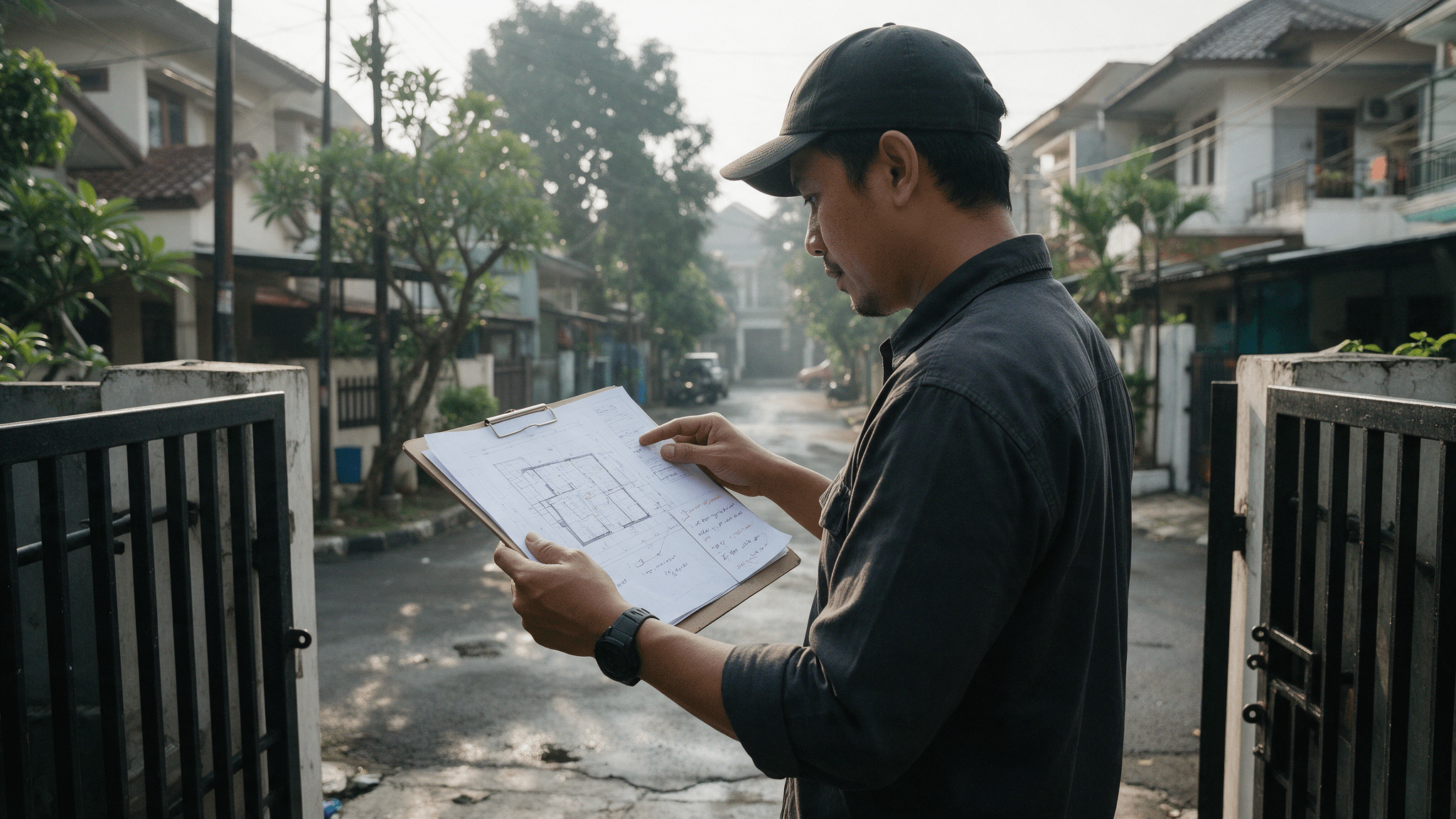
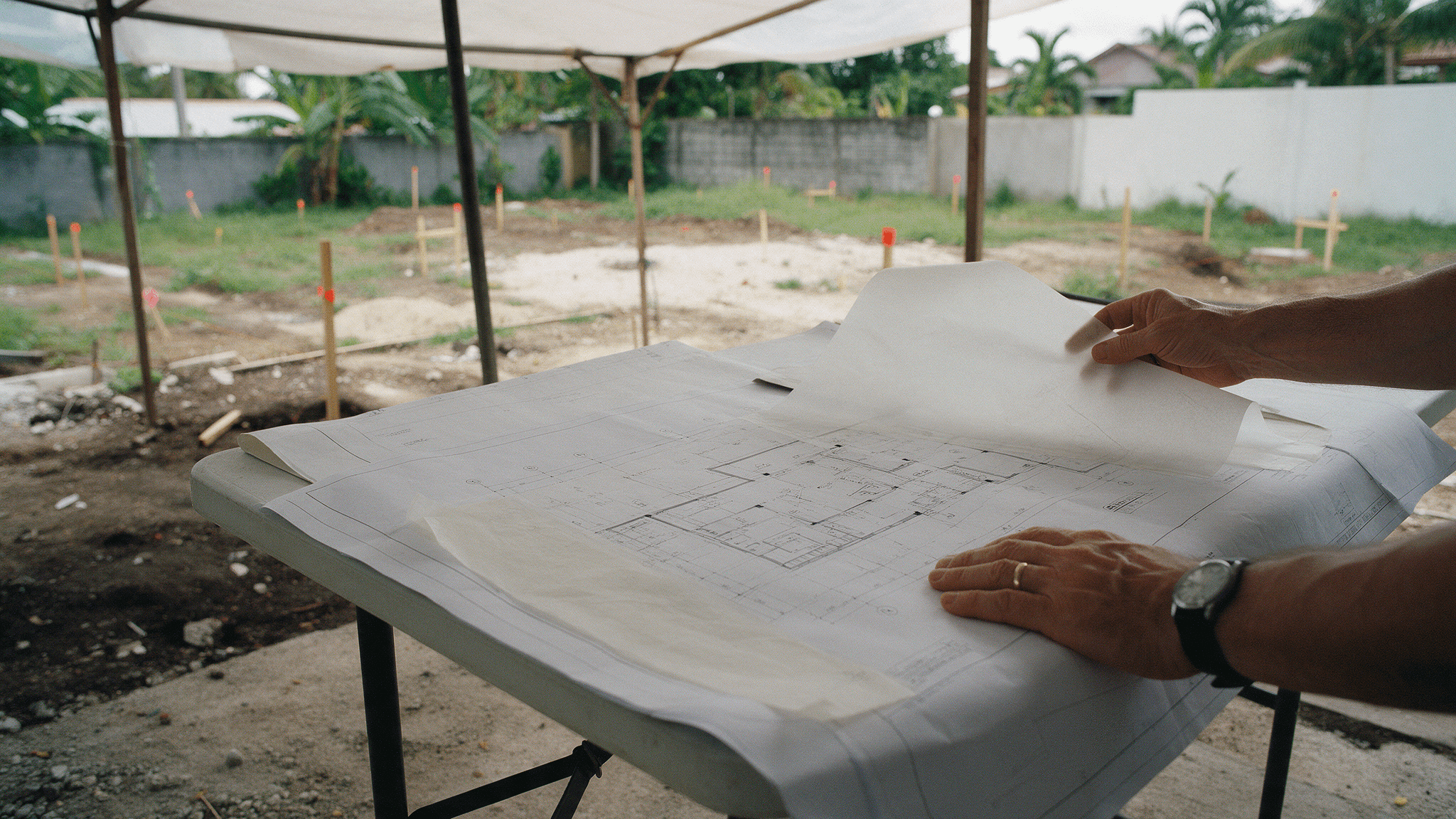
Choose an architect for a premium Jakarta house once you can write a brief that states site constraints, program, climate priorities, and who decides. A calm image grid is easy to like; it is not a criterion. The brief is the filter: studios that answer it with stages, consultants, and trade-offs are easier to compare than studios that answer only with style words.
This is for owners commissioning a residence on a Jakarta or Greater Jakarta lot — If you cannot yet name the plot and the household, pause hiring and finish the brief.
Site facts that matter more than style boards
Include address or district, approximate area, orientation, neighbour heights, noise sources, known flood or drainage history, construction access, and any cluster or covenant rules. Jakarta lots punish briefs that skip overlooking and afternoon sun.
A studio that never asks for these is not designing for your tapak. Overseas gallery references can help taste; they do not replace drainage and setbacks.
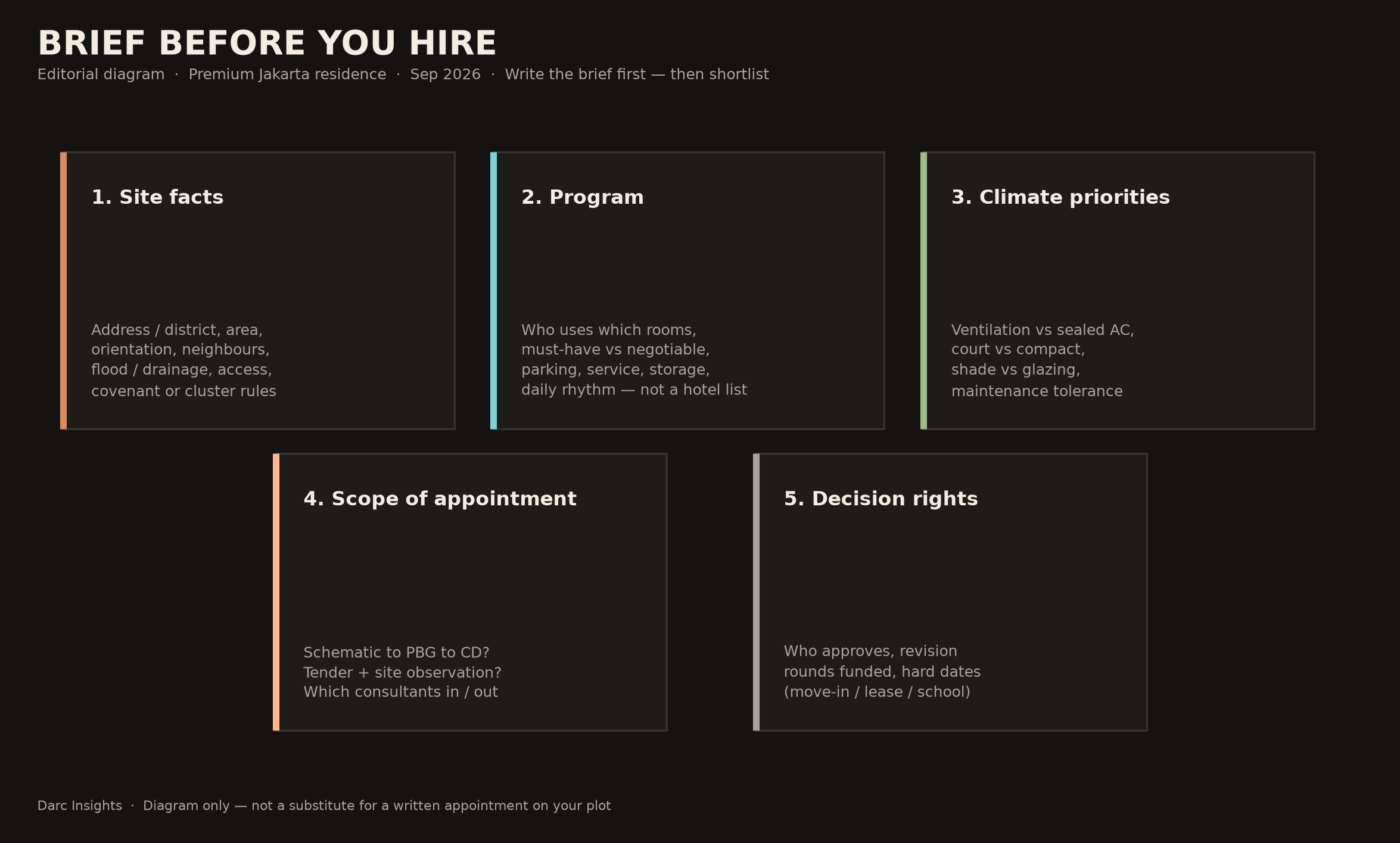
Site, program, climate, scope, and decision rights
Program, climate, and who decides
List rooms with who uses them and when — not only a count. Mark must-haves versus negotiable. Premium houses often fail when the brief is a hotel checklist with no daily rhythm. Parking, service zones, and storage usually drive plan efficiency more than feature rooms.
Rank climate priorities early: cross-ventilation versus sealed AC comfort, court versus compact footprint, deep shade versus maximum glazing, maintenance tolerance for timber and planted areas. Tropical performance is a brief decision, not a finish selection later. Tropical Modernism Without the Cliché covers the envelope side of that conversation.
Say whether you need schematic only, permit drawings (PBG package), construction documents, tender support, and site observation — and which consultants you expect the architect to coordinate. Fee reading belongs beside that scope: Luxury Home Architect Fees.
Name who approves (owner, couple, family office), how many revision rounds you will fund before the appointment locks, and any hard dates. Ambiguous authority produces endless options and a weak fee.
Neutral criteria that usually survive a first meeting
When shortlisting, these distinctions hold up better than “modern tropical” as a vibe:
- Licensing — current STRA / IAI status (or a clear licensed lead) stated for the appointment.
- Jakarta / tropical literacy — early questions about sun, rain, neighbours, and drainage—not only moodboards.
- Brief interrogation — willingness to challenge an inflated program and offer trade-offs on this lot.
- Deliverables clarity — a stage table with documents, not only “full service.”
- Consultant honesty — structure, MEP, and interiors named in or out.
- Site role — visit cadence stated if construction observation is included.
- Evidence — built or documented residences you can read, not renders alone.
Prefer the studio that improves your brief over the one that only flatters it. A premium Jakarta house is usually won in constraints, not in the first pretty massing.
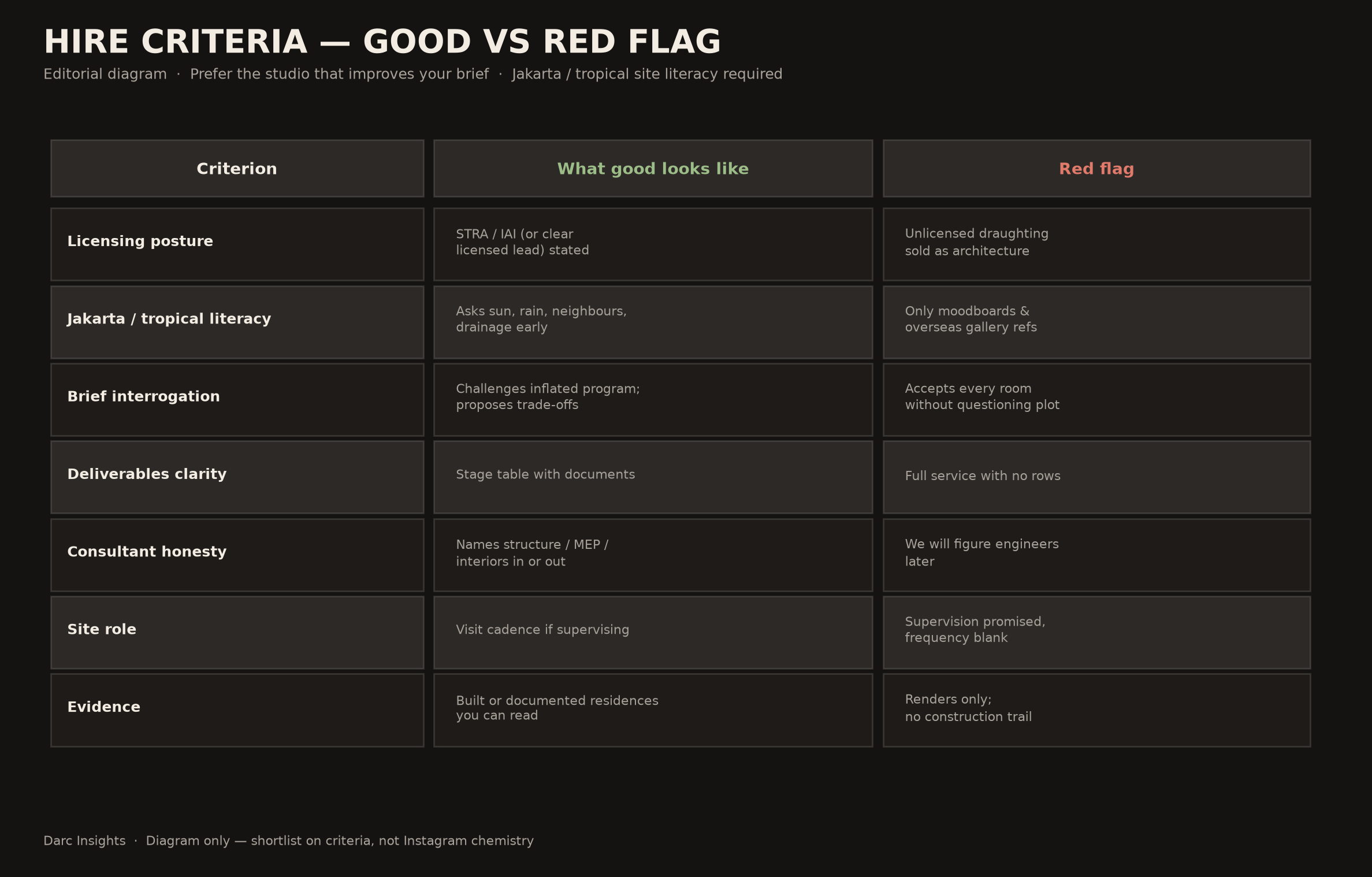
Hire criteria matrix for a premium Jakarta residence
What we usually ask owners to bring
When owners arrive with only image boards, the first useful session is often subtraction: which rooms earn floor area on this lot, which elevations take afternoon sun, and whether a court is affordable given setbacks. Projects such as L House, The Balai, and Cipayung House are useful as evidence of climate and plan priorities, not as templates to copy. Every plot differs; portfolio resemblance is not a substitute for your brief.
Assumptions for cost talk (Sep 2026, premium residential, Jakarta-first): we do not publish a universal architect fee or build cost per m² here. Choosing on lowest fee without a matched stage list usually shifts cost into construction changes. Choosing on maximum imagery without site observation shifts cost into site mistakes. A tighter brief often lowers fee risk more than haggling a percentage.
Questions worth asking the shortlist
Bring the same written questions to every firm:
- How would you challenge this program on this lot?
- Which stages are in, and what documents does each produce?
- Who hires structure, MEP, interiors, landscape — and when?
- How many revision rounds sit inside the fee before the appointment locks?
- If you supervise, what is the visit cadence?
- Which built residences can we walk or read for construction reality?
- How do you state licensing (STRA / IAI as applicable)?
Before you open fee talks—or send a shortlist request—a short owner sheet helps: plot facts and constraints on one page; program with must-have vs negotiable; climate priorities ranked; appointment stages named; consultant matrix sketched; decision maker and revision budget stated; hard dates written down. Send that sheet with your site and brief when you want a comparable response.
- Plot facts and constraints on one page
- Program with must-have vs negotiable
- Climate priorities ranked
- Appointment stages named (through CD / site or not)
- Consultant matrix sketched
- Decision maker and revision budget stated
- Hard dates written down
What can stay open until schematic
You do not need final material boards, exact furniture schedules, or a frozen art collection to hire well. Those settle in design once massing and program hold.
What should not stay open: the plot, the household rhythm, the stage of appointment you actually need, and who holds decision rights. Leave those vague and the shortlist will compete on moodboards instead of fit.
Shortlist from a written brief
Send the site facts, program must-haves, climate priorities, and the appointment stages you need. We will respond against that brief—not against a moodboard alone.
Send site & brief